What Should You Consider When Purchasing Corrugated Pipes? Exporter's Guide
Corrugated pipes, an indispensable part of infrastructure systems, are widely used worldwide in sewage, stormwater drainage, and cable protection systems. Due to their high durability, lightweight structure, and long lifespan, they are preferred by both technical personnel and project managers.
However, when purchasing corrugated pipes, especially for international projects, there are many critical factors to consider. In this article, we provide a guide for buyers covering how to select the right product, ensure quality, and find the right manufacturer in detail.
1. Material Quality and Raw Materials
Corrugated pipes are generally manufactured from thermoplastic raw materials such as HDPE (High-Density Polyethylene) or PP (Polypropylene). Before purchasing, it is essential to ask which raw material the pipe is made from. HDPE stands out for its flexibility and chemical resistance.
Whether the raw material is recycled or virgin also affects performance. If recycled material is used, the quality control procedures applied by the manufacturer should be carefully evaluated. Pipes produced with poor-quality raw materials may develop issues such as cracking, crushing, or leakage over time.
2. Standards and Certifications
Corrugated pipes must be produced in compliance with specific international standards. Certificates of conformity to standards such as EN 13476, ISO 21138, and TS 1478 should be requested. These certificates guarantee the product’s long-term performance and integration with infrastructure.
Certifications are also among the legal documents that may be required during customs or tender processes. The technical dossier containing the manufacturer's current certificates is an important criterion in purchasing decisions. Management system certificates such as CE, ISO 9001, ISO 14001, and OHSAS 18001 also provide insight into the quality approach.
3. Surface and Layer Quality
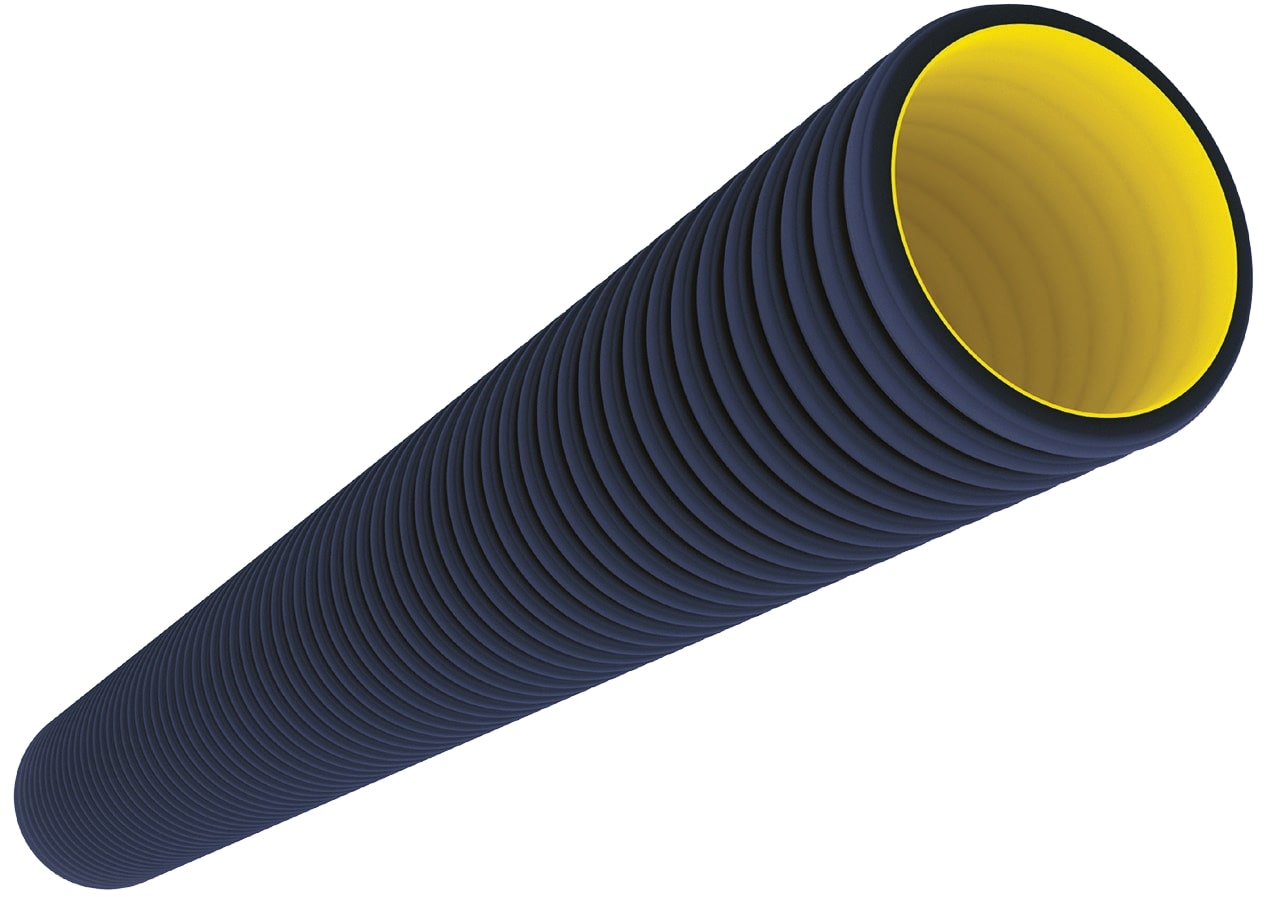
Corrugated pipes have a double-layer structure: the outer surface is corrugated (ribbed), and the inner surface is smooth. The smoothness of the inner surface facilitates fluid flow and prevents blockages. Symmetrical, solid, and damage-free outer ribs are important for durability.
It is recommended to request samples for visual and tactile inspection. Poor-quality production may cause problems such as layer separation, deformation, and insufficient wall thickness. Such structural defects can lead to early damage of the pipe in the field.
4. Load Bearing Capacity and SDR Value
The durability of corrugated pipes is expressed by SDR (Standard Dimension Ratio) or SN (Stiffness Number). Values such as SN4 and SN8 indicate how resistant the pipe is under load. For underground roads, railways, or industrial use, pipes with SN8 or higher values should be preferred.
Load capacity should be calculated considering soil conditions and application area. In addition, the tolerance values of the molds used in pipe production and the manufacturing technology affect load bearing performance.
5. Fittings and Compatibility
Compatibility of parts such as couplings, gaskets, and elbows to be used together with the pipes to be purchased is also extremely important. Having all complementary products offered by the same manufacturer simplifies the supply chain and reduces the risk of incompatibility during installation.
Especially in large-diameter infrastructure projects, the performance of sealing components is critical. Otherwise, extra labor, time, and cost may arise on-site. Therefore, products that have undergone connection testing should be preferred.
6. Logistics and Shipping Conditions
If exporting, logistics factors such as packaging, container loading, transport insurance, and customs documents must also be considered. An experienced corrugated pipe manufacturer supports all processes from proper loading to transit documentation.
Shipping conditions should be clearly agreed with the manufacturer to prevent deformation during transport. Delivery time, unloading plans, and customs clearance services should not be overlooked. Well-planned logistics play a critical role in completing the project on time.
7. Reference Projects and Experience
When making a purchase decision, it is important to check which projects the manufacturer has supplied before. The countries where they are active and their level of involvement in public or private sector projects are valuable. Companies like SOR Plastic have proven this reliability with shipments to countries such as Azerbaijan, Syria, Iraq, and Georgia.
Additionally, feedback from customers and partnerships provide important insights about the company. Genuine reference projects are indicators that prove technical competence and on-time delivery success.
8. Price-Performance Ratio
The cheapest product is not always the best choice. Along with the price per meter of the pipe to be purchased, the warranty period, technical support, logistics conveniences, and certification status should be evaluated. If considered long-term, a premium product may be more cost-effective.
A cheaply purchased product in the short term may increase total ownership cost due to frequent maintenance and replacements. Therefore, product lifespan and maintenance needs should also be included in calculations.
9. Technical Support and After-Sales Service
It should always be asked whether the manufacturer provides technical support for issues that may arise after delivery. A company that can offer solutions to problems encountered on-site makes the purchasing process much more valuable.
Especially when project-specific technical specifications are involved, working with companies that provide engineering support is a great long-term advantage. Trained support staff can prevent errors that may occur on-site.
Conclusion
Corrugated pipes are important products that provide long-term performance in infrastructure projects, reduce costs when chosen correctly, and add value to the project. All technical, logistical, and supplier-related details should be carefully evaluated during the purchasing process.
As SOR Plastic, with our experience in many countries, internationally standard-compliant production facilities, and expert logistics team, we are ready to provide solutions for your projects.
Examples of Corrugated Pipes