What Is the TS EN 13476 Standard? A Quality Guide for HDPE Corrugated Pipes
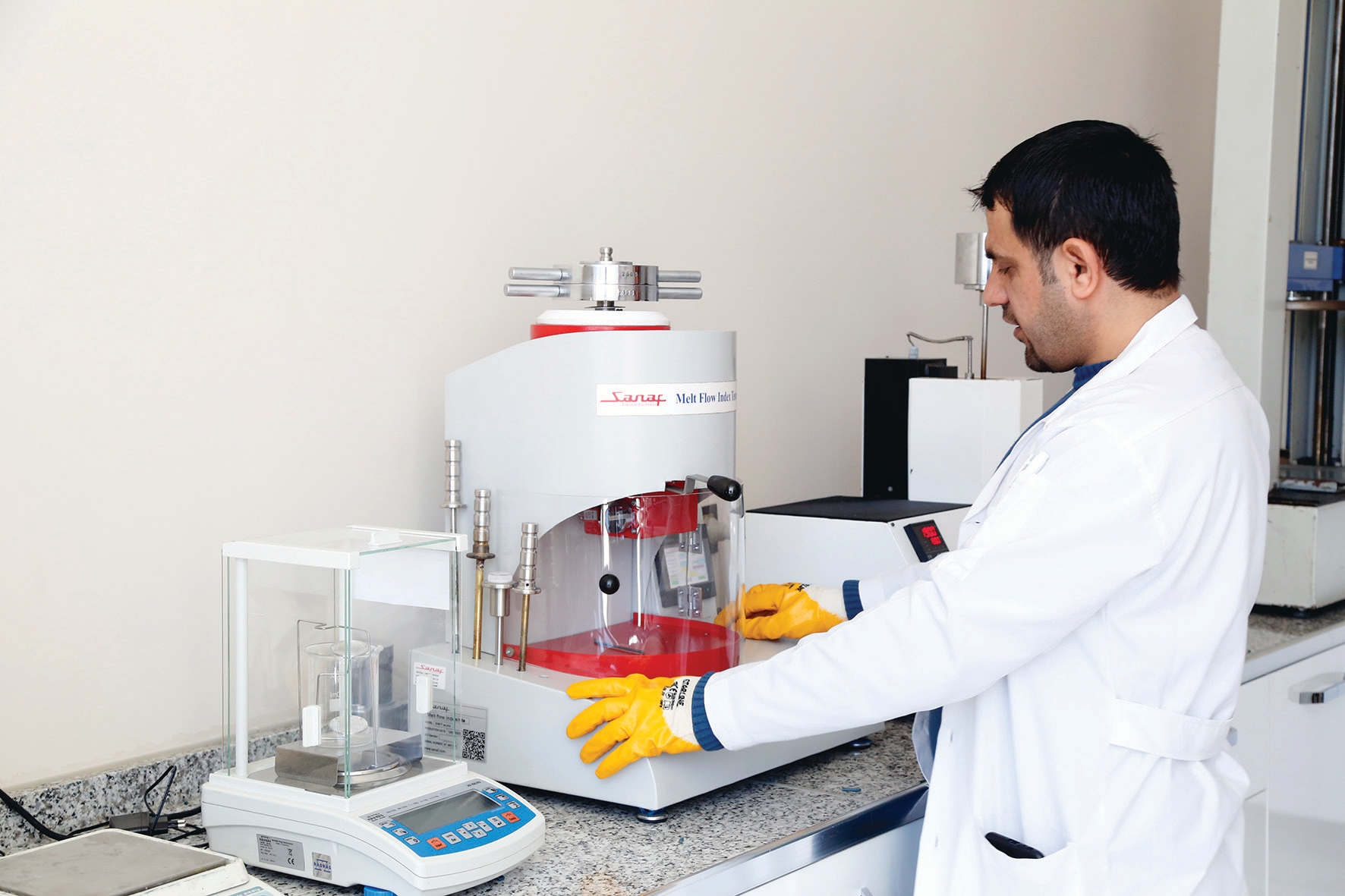
As cities grow, sewer, stormwater, wastewater and drainage networks depend on correct pipe selection and manufacturing quality. For HDPE corrugated pipes, compliance with the relevant standard is essential for durability, watertightness, deformation resistance and service life.
TS EN 13476 is one of the standards frequently referenced in infrastructure projects. This guide explains its scope, pipe classifications, SN4 and SN8 stiffness classes, key quality tests and selection criteria.
What Is the TS EN 13476 Standard?
TS EN 13476 is a European series of standards defining requirements for structured-wall plastic pipe systems used in buried gravity drainage and sewerage systems. It covers technical properties and performance requirements for structured-wall systems made from PVC-U, PP and PE.
Dimensions, ring stiffness, mechanical performance, impact resistance, flexibility, joint and sealing performance, production and quality-control criteria are evaluated. A compliant corrugated pipe must therefore meet defined technical criteria, not merely have a particular appearance.
Which Pipes Does TS EN 13476 Cover?
Structured-wall pipes are generally assessed in two geometric groups: Type A and Type B.
Type A Pipes
Type A pipes may have structured geometries on their internal and external surfaces, with different profiles and cross-sections depending on the production technology.
Type B Pipes
Type B refers to the widely used structure with a profiled or corrugated outside and a smooth inside. This design combines two benefits:
- Outer profile: Contributes to ring stiffness against soil and traffic loads.
- Smooth inner surface: Supports regular flow and improved hydraulic performance.
What Are SN4 and SN8 Corrugated Pipes?
SN expresses the nominal ring stiffness of a pipe under specified conditions and is given in kN/m².
SN4 Corrugated Pipe
SN4 is the pipe class with a nominal ring stiffness of 4 kN/m². With suitable design and installation conditions, it may be used in green areas, pedestrian zones, car parks and locations with light traffic.
SN8 Corrugated Pipe
SN8 has a nominal ring stiffness of 8 kN/m² and may be selected for higher external loads, heavy traffic and applications requiring greater mechanical resistance. SN8 is not automatically the correct choice for every project; the class should follow engineering calculations, soil, cover depth and traffic loads.
Which Tests Are Performed on Corrugated Pipes?
1. Ring Stiffness and Flexibility
The pipe is subjected to controlled deformation in a laboratory to evaluate load behavior, structural integrity after deformation and compliance with its stiffness class.
2. Impact Resistance
Impacts that may occur during transport, storage and installation are evaluated, including mechanical behavior at low temperatures.
3. Dimensional Checks
Nominal diameter, internal diameter, wall structure, wall thicknesses and profile geometry are checked against standard tolerances.
4. Watertightness Tests
The sealing performance of joints formed by sockets, couplings and gaskets is tested. Correct design and installation help prevent groundwater ingress and wastewater leakage.
Why Does Raw Material Quality Matter?
Appearance alone does not determine a corrugated pipe's performance. Polyethylene properties, production technology and quality-control processes directly affect long-term service.
- Technical properties of the raw material
- Production standard and technical documents
- Quality-control results
- Conformity and test certificates
Compliance with TS EN 13476 is not the same as using 100% virgin material. Raw-material requirements must be assessed according to the material type and relevant part of the standard. Review technical documentation and conformity, not only a virgin-material claim.
EPDM Gaskets and Watertightness
Correctly designed sockets, couplings and gasket systems directly affect the integrity and sealing of a corrugated pipe line. EPDM gaskets can provide joint sealing when used correctly.
Performance also depends on gasket profile, pipe and socket geometry, installation quality, axial alignment and soil conditions. The pipe, socket and gasket must be assessed as one system.
Why Is TS EN 13476 Important?
Infrastructure pipes often operate underground for decades where access is difficult. Standards such as TS EN 13476 help manufacturers and project teams evaluate performance against defined technical criteria.
- Measurable product-quality evaluation
- Compliance with technical specifications
- Healthier project and site inspections
- More predictable system performance
What Should You Check When Choosing Corrugated Pipe?
- Standard compliance: Verify the relevant TS EN 13476 requirements.
- SN class: Select SN4, SN8 or another class according to loads and installation conditions.
- Raw material: Review technical properties and manufacturer documentation.
- Joint system: Ensure sockets, gaskets and fittings are compatible.
- Production quality: Check dimensional tolerances, profile geometry and quality controls.
- Technical documents: Request conformity documents, test reports and technical files.
Conclusion: The Right Pipe and the Right Standard
Pipe selection should consider more than purchase price. Service conditions, soil, traffic loads, installation method, joint system and standards compliance must be evaluated together.
TS EN 13476 helps assess structured-wall plastic pipe performance against technical criteria. For HDPE corrugated pipe, consider standard compliance, raw material, production quality and connection systems alongside SN class.
SOR Plastic prioritizes quality, standards-compliant production and reliable products for infrastructure projects.
HDPE Corrugated Pipe Quality Test